How to Personalize Your Work Desk Without Clutter

Your desk is where calendars get ignored, coffee gets reheated, and someone eventually asks if you have "five minutes." Learning how to personalize your work desk is not about turning it into a tiny gift shop. It is about making the place where you spend suspiciously large chunks of your life feel more like yours.
A good desk has personality without requiring a guided tour. It gives you a small lift at 9:04 a.m., helps you find what you need at 2:37 p.m., and does not make your manager wonder whether you have quietly moved in. The trick is choosing a few things that work hard, look intentional, and say something mildly accurate about the person doing the work.
Start With What Your Desk Actually Does
Before adding anything, look at the desk you already have. Is it a home-office setup that also hosts snacks, personal mail, and one cable you are scared to identify? Is it a shared office desk where every inch of space is a diplomatic negotiation? Is it a cubicle, a hot desk, or a kitchen table that becomes an office between breakfast and dinner?
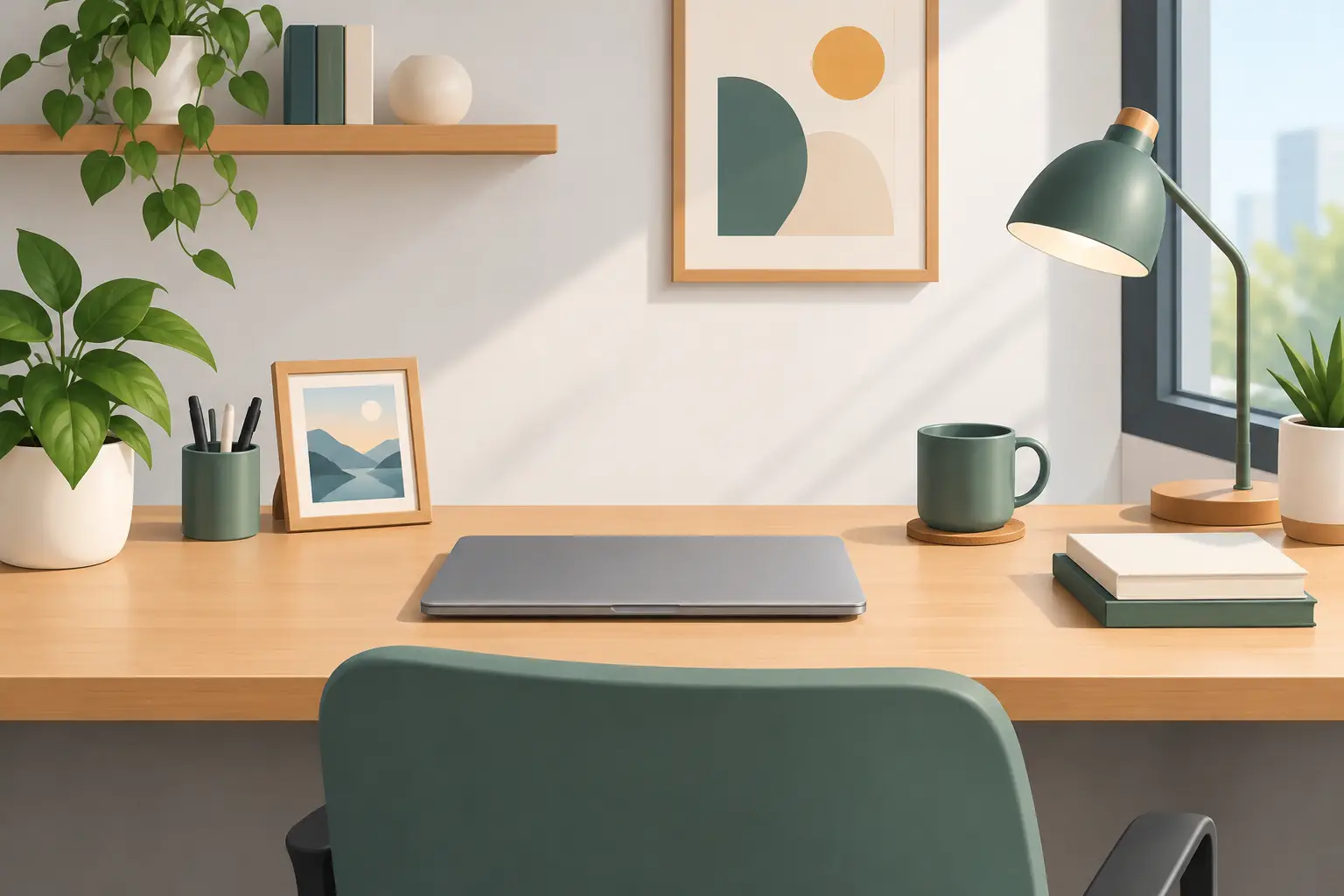
The answer changes the approach. A permanent home-office desk can handle a lamp, a plant, framed print, and a few carefully chosen objects. A shared desk needs personality that can be packed away or kept close to the essentials. If you use a laptop at the dining table, your best personalization may be a great mouse mat, a good mug, and one small tray that makes setup feel deliberate instead of temporary.
Start by clearing anything that has no job, no meaning, or no realistic chance of being used before 2029. Personal does not mean crowded. In fact, a little empty space makes the things you do keep look more intentional.
Give Your Work Desk One Point of View
The easiest way to make a desk feel pulled together is to pick a loose visual direction. Not a theme with rules, costumes, and a mood board nobody asked for. Just a point of view.
Maybe you like monochrome with one bright color. Maybe warm wood, black accessories, and a slightly overwatered plant are your thing. Maybe your desk is mostly neutral, with one dryly funny graphic that acknowledges the emotional complexity of opening a spreadsheet at 8 a.m. All are valid. The goal is for the desk to look like it belongs to one person, not four different clearance aisles.
Choose two or three repeating elements. That could be black and white, clean typography, and a little green. Or coffee-colored ceramics, soft lighting, and a couple of personal photos. Repeating a few visual cues makes even inexpensive items look considered. This is helpful because "considered" is a flattering word for owning fewer things.
Let One Funny Item Do the Talking
Humor is excellent desk decor because it makes an ordinary object feel like a small act of self-expression. The key is restraint. One witty mug or mouse mat can land far better than six signs yelling about caffeine, deadlines, and surviving meetings.
Pick a joke you would still enjoy after seeing it every day. Dry humor generally ages better than loud humor, particularly at work. A clean, high-contrast desk accessory with a familiar complaint does not need an explanation. It just sits there, quietly correct.
That is the appeal of something like a SarkyJoe mouse mat: useful first, funny second, and not trying to turn your desk into a stand-up set. The best desk humor gives colleagues a tiny smile, then lets everyone get back to pretending the meeting could have been an email.
Personalize the Things You Touch All Day
Desk accessories earn their space when they improve the workday. Start with the objects your hands reach for repeatedly: your mug, mouse mat, keyboard, notebook, pen cup, headphones, and phone stand. These are the easiest places to add color, texture, or a bit of attitude without creating clutter.
A mug is a good example. It is visible, practical, and usually in your hand before you are emotionally prepared to speak. Choose one you genuinely like using. The same goes for a notebook that makes you want to write down an idea, rather than lose it on a receipt under your keyboard.
Small upgrades matter more than people expect. A comfortable wrist rest can make long computer sessions less annoying. A pen that writes well prevents the low-grade rage of a skipping ballpoint. A charger placed where it belongs removes the daily ritual of searching under furniture like you are on an archaeological dig.
If you are deciding between something decorative and something useful, choose useful most of the time. Your desk should support your personality, not become another thing you need to manage.
Add Proof That You Exist Outside of Work
A personal desk should include one or two reminders that your entire identity is not attached to your inbox. Photos are the obvious option, but they are not the only one. A postcard from a trip, a small piece of art, a concert ticket, a favorite book, or a souvenir with an actual story can do the job.
Keep it selective. One framed photo and one small meaningful object usually feel warmer than a crowded gallery wall squeezed between monitors. At an office desk, this is also a practical choice. You want details that invite a little connection without giving everyone a full documentary about your life during printer downtime.
Plants can help, too, if you are willing to acknowledge their basic needs. A small pothos, snake plant, or faux plant adds softness to hard surfaces and screens. A real plant offers the additional excitement of responsibility. A faux one offers the comforting knowledge that nobody will find it collapsed after a long weekend.
Use Lighting to Change the Mood, Not Your Tax Bracket
Overhead office lighting has a special ability to make every human look like they are awaiting further instructions. If your setup allows it, add a small desk lamp with a warm bulb. It can make early mornings and late afternoons feel less clinical, especially in a home office.
This does not mean your desk needs to glow like a gaming convention. A single warm light is often enough. Place it to one side of your screen to reduce harsh contrast and avoid glare. If you work in a shared office, a subtle clip-on light may be more practical than claiming a lamp-sized territory.
Organize the Boring Stuff So the Good Stuff Can Show Up
Cables, sticky notes, chargers, and random papers are not inherently evil. They simply have a talent for multiplying when left unsupervised. Basic organization gives your personal items room to breathe.
Use a small tray for daily loose items, a cable clip for cords that keep escaping, and a vertical file holder if paper is part of your job. Keep only the supplies you use regularly within arm's reach. Everything else can live in a drawer, box, or another dimension, provided you can find it when needed.
You do not need a color-coded system worthy of a documentary. You need homes for the things that otherwise drift around your desk. The payoff is immediate: less visual noise, fewer lost objects, and a setup that looks good even when you are too busy to stage it for the internet.
For a shared or open office, think portable. A zip pouch, small caddy, or laptop sleeve can hold your favorite essentials and make moving desks less irritating. You are still allowed to have standards, even if your assigned workspace changes every Tuesday.
How to Personalize Your Work Desk Without Losing Focus
There is a line between a desk with character and a desk that constantly asks for your attention. If you feel distracted, crowded, or weirdly guilty looking at all the things you bought to feel organized, edit the setup.
Keep your monitor area visually calm. Put sentimental items slightly off to the side. Avoid stacking decor in front of screens or filling every available vertical surface. The space directly in front of you should make work easier, not offer seventeen competing thoughts before lunch.
A simple test helps: remove everything from the desk, then add back only what you use weekly, what makes you happy, or what makes the space function better. If an item does none of those things, it may be a very nice item for somewhere else.
Your desk does not need to impress anyone. It just needs to make the workday feel a little more human. Keep one useful thing that makes you smile, one detail that feels personal, and enough clear space to put down your coffee when the next "quick" call begins.
Comments