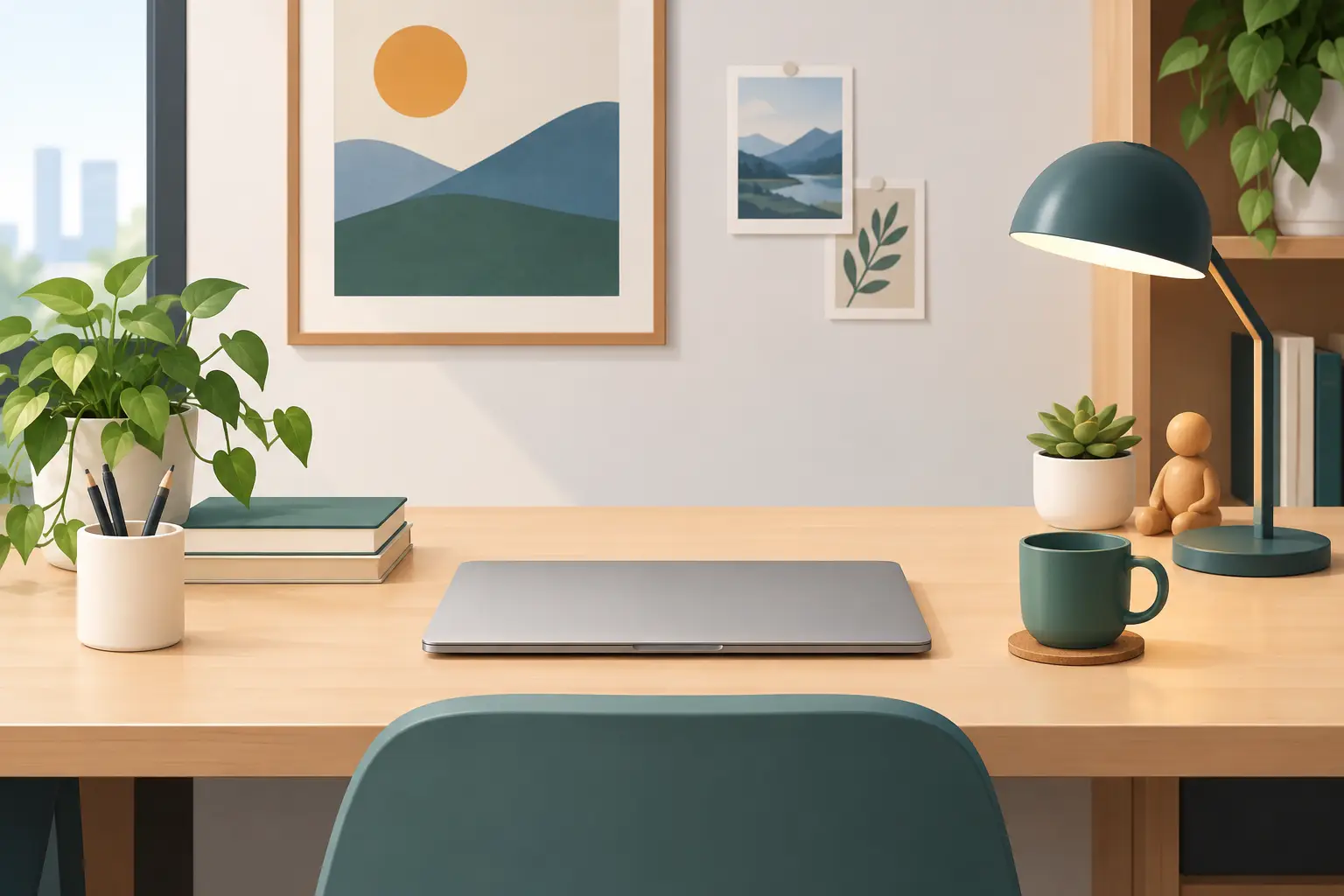
How to Create Desk Personality Without Clutter

Your desk has seen your coffee, your deadlines, and at least one meeting that absolutely could have been an email. It deserves better than looking like a temporary workstation in a very beige government office. Learning how to create desk personality is not about covering every available inch with tiny objects. It is about making the spot where you spend a suspicious number of hours feel recognizably yours.
A desk with personality should give you a small lift before you open your inbox. Maybe it makes you laugh. Maybe it keeps your brain from wandering off to find a new career in coastal lighthouse maintenance. The best version is useful, visually calm, and just personal enough to make someone say, “Yep, that tracks.”
How to Create Desk Personality Without Creating a Mess
The easiest mistake is treating personality as decoration alone. A crowded desk can look expressive for approximately 12 minutes, then it starts looking like an evidence table. Personality works better when it is built into the things you already use: the mug, mouse mat, notebook, pen holder, screen background, or the one object that makes a grim Tuesday slightly less grim.
Start by deciding what you want your desk to say. Not in an inspirational-poster way. More like a quick first impression. Are you organized but tired? Creative with a firm anti-meeting stance? Calm on the surface, one notification away from becoming a woodland cryptid? A clear point of view makes choices easier.
Choose one overall mood and let it quietly run the place. It could be clean and graphic, warm and bookish, colorful and chaotic in a controlled way, or minimal with one dry joke doing the heavy lifting. The goal is not to build a set for a lifestyle video. It is to avoid buying six unrelated things because they were individually cute at 1:14 a.m.
Start With the Items You Touch Every Day
Your daily-use items carry more visual weight than shelf decor ever will. A mug sits in your peripheral vision. A mouse mat occupies a large patch of desktop real estate. A notebook gets opened when the workday turns serious, or when you need to look serious while writing “buy more coffee.”
That makes these items the sensible place to show a little character. Pick a mug that sounds like you, rather than one with a motivational phrase written in the font of a dental waiting room. Choose a mouse mat with high-contrast artwork or a line that makes you smirk without demanding an explanation from every visitor.
This is also where a simple item can do more than an elaborate one. A clean desk accessory with a deadpan message has room to breathe. It reads as intentional, not as a cry for help made of novelty stationery.
Give Yourself One Good Visual Anchor
Every desk needs an anchor: the item your eye notices first. For some people, that is a monitor setup. For others, it is a graphic mouse mat, a framed print, a desk lamp, or a favorite mug that has survived several “busy seasons.”
Keep the anchor proportional to the desk. A small desk does not need a giant lamp, a monitor riser, a plant, three storage trays, and a miniature statue of a frog holding a sword. The frog may be excellent. Space is still space.
If your desk is mostly neutral, use the anchor for contrast. Black-and-white graphics, one strong color, or a simple illustrated design can make the space feel considered without making it busy. If your desk already has colorful equipment, choose something quieter so it does not turn into an argument between objects.
Build Personality Around Your Actual Work Style
A desk should support the way you work, not the way you imagine yourself working after watching a productivity video. Someone who sketches ideas all day needs different things than someone who lives in spreadsheets. Someone working from a kitchen table has different limits than someone with a dedicated home office and a chair that does not technically belong in a dining room.
If you work with paper, make room for it on purpose. A single tray, a notebook you like using, and a pen cup can look deliberate. If everything happens on-screen, reduce physical clutter and invest your personality in the few visible objects that remain. The less surface area you have, the more each item needs to earn its place.
Remote workers often need a desk that can disappear after hours. In that case, choose accessories that are easy to move or store, and let a few small pieces do the work. A good mug, a compact mat, and one piece of art can establish a mood without turning the dining table into permanent middle-management territory.
Office workers have a different calculation: you want a desk that feels personal without giving your manager a new topic for a leadership check-in. Aim for warm, dry, and reasonably safe for daylight. Humor about coffee, meetings, or general professional exhaustion tends to land. Humor that requires a call from HR can stay at home, where it belongs.
Use Humor Like Seasoning, Not a Megaphone
A sarcastic desk does not have to shout. In fact, it is usually funnier when it does not. One well-chosen line on a mug or mouse mat says more than five competing slogans taped around the monitor.
Understated humor gives a space a point of view. It tells people you have noticed the absurdity of work, but you are not planning to write a 40-part thread about it. That is a useful social skill, frankly.
SarkyJoe-style desk accessories work best when they feel like an aside to yourself, not an announcement to the entire floor. The joke should still be enjoyable after you have seen it 400 times. If it only works because it is loud, it may get old faster than an office icebreaker.
Add Texture and Life, Then Stop
A desk made entirely of screens, plastic, and cables can feel a bit like you have been assigned to monitor a spacecraft. Adding one natural or tactile element softens it. A small plant, a ceramic cup, a cork coaster, a wooden tray, or a textured notebook can make a big difference.
Plants are popular because they work, but choose based on your habits, not your aspirations. If you forget to water a houseplant, get something low-maintenance or accept an artificial plant with dignity. A crispy fern is not desk personality. It is a tiny public record of neglect.
Personal photos can work too, especially in a home office. Keep them selective. One or two images can make a desk feel grounded; fourteen can make it feel like a family reunion has colonized your monitor stand. The same rule applies to collectibles. Pick the one that genuinely delights you, not every item from a category you briefly became interested in during “the years.”
Let Empty Space Do Some Work
This part is less exciting, which is why it is useful. Empty space is what makes your chosen items look like choices instead of leftovers. It gives your hands room to work, your eyes room to rest, and your coffee a fighting chance of avoiding your keyboard.
Try a simple reset at the end of the day. Put loose papers in one place, return pens to their holder, clear cups, and remove anything that drifted onto the desk without a job. You do not need a ceremonial cleaning routine with labeled bins and a playlist called Focus Fortress. Two minutes is enough.
If something has been sitting there for a month and you neither use it nor enjoy looking at it, move it. The desk is not a storage unit for objects that are “kind of nice.” It is a working space with limited patience.
Change Small Details When the Mood Changes
Desk personality does not have to be permanent. Swapping one or two items can make an old setup feel new without buying a cart full of things. Rotate mugs, change your wallpaper, replace a tired notepad, or bring in a different small print when the season, project, or general emotional weather shifts.
This approach is cheaper, less cluttered, and more honest. You are allowed to outgrow a desk joke. You are also allowed to keep the one that still makes you laugh, even if it has been there long enough to qualify for tenure.
The right desk does not need to impress anyone. It just needs to make sitting down feel a little less like reporting for duty. Choose a few useful things with a clear point of view, leave room to work, and let the personality show up in the details. Your inbox will remain itself. At least the desk does not have to.
Comments